The control of fire spreading
is a research challenge.

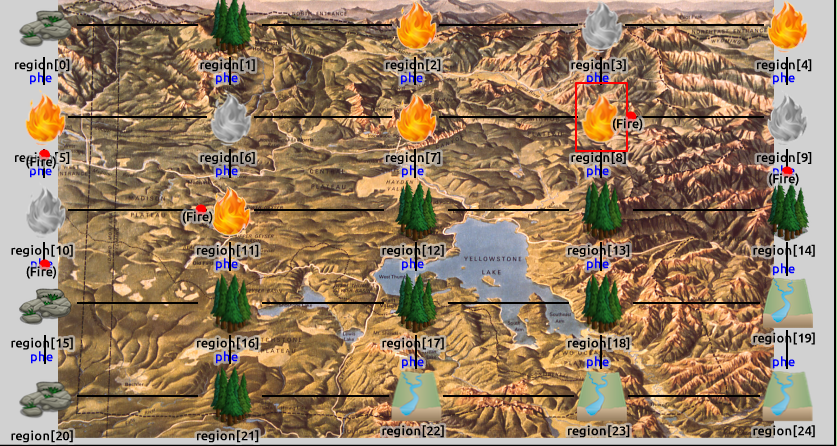
The impact of the fire in the environment makes essential the study and analysis of fire spread with the goal of designing new tools that help to mitigate the wildfire expansion and, as a consequence, their effects. In this work we introduce a platform to deploy an algorithm, based on Ant Colony Optimization, to determine the best plan to attack fire focus. The framework is based on a theoretical model that allows us to represent the main elements of the environment in which fire evolves. The tool provides a visualisation component to model realistic landscapes.
User interface

Forest model


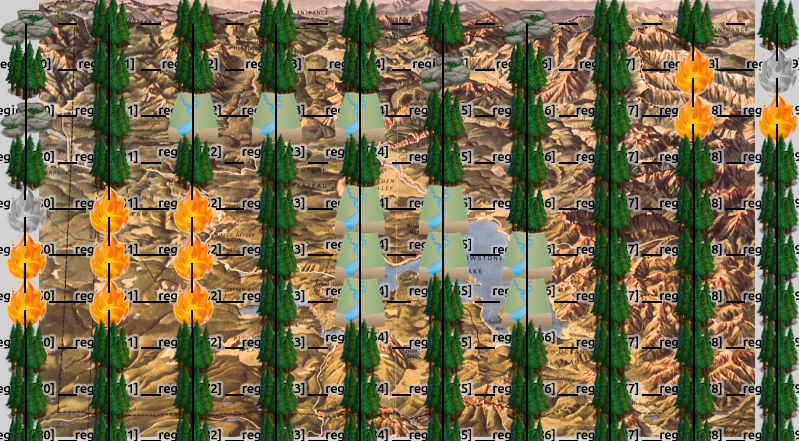
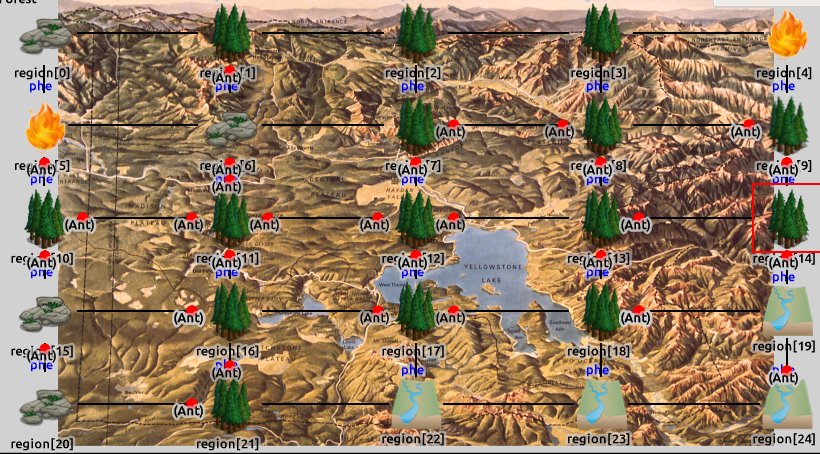
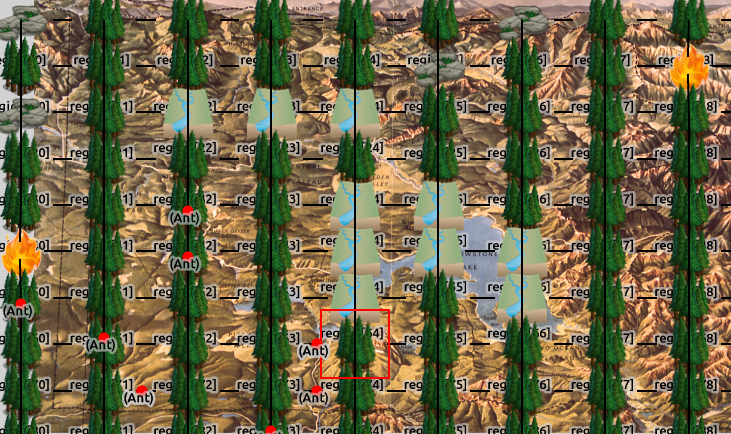
It is well known the wide spectrum, diversity and extension of the existing wooded areas. Therefore, it is usual that these areas are composed by several species of trees, brushwood and other geographical elements such as mountains, rivers and grasslands. The user can model the forest in regions which include information related to the most relevant characteristics of the land, such as the vegetation volume, humidity, temperature, elevation, inclination and probability of fire propagation.


Wildfire model


In this work, due to the features of our approach, we have applied a model based on cellular automata (CA) in which all the factors affecting the forest fire spreading can easily be incorporated. The model leads to algorithms which can exploit the inherent parallelism of the CA structure. Cellular automata consist of a grid of cells These cells are in a specific state that changes over time on the basis of its neighbors states and a function. Despite the simplicity of this structure, it allows to model complex systems. The simulation of the wildfire corresponds to the evolution of the states of the regions define in the considered surface along the time.

Experiments

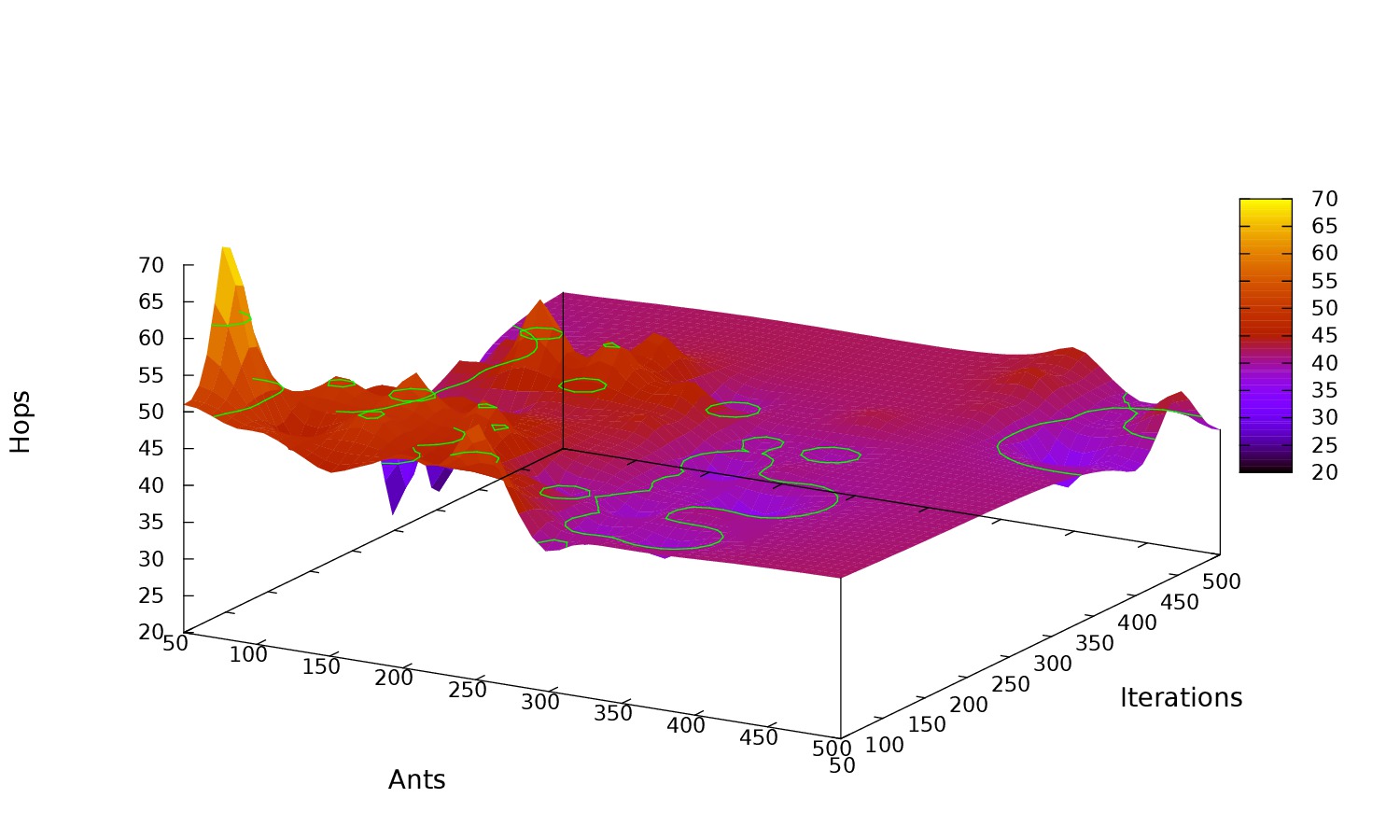
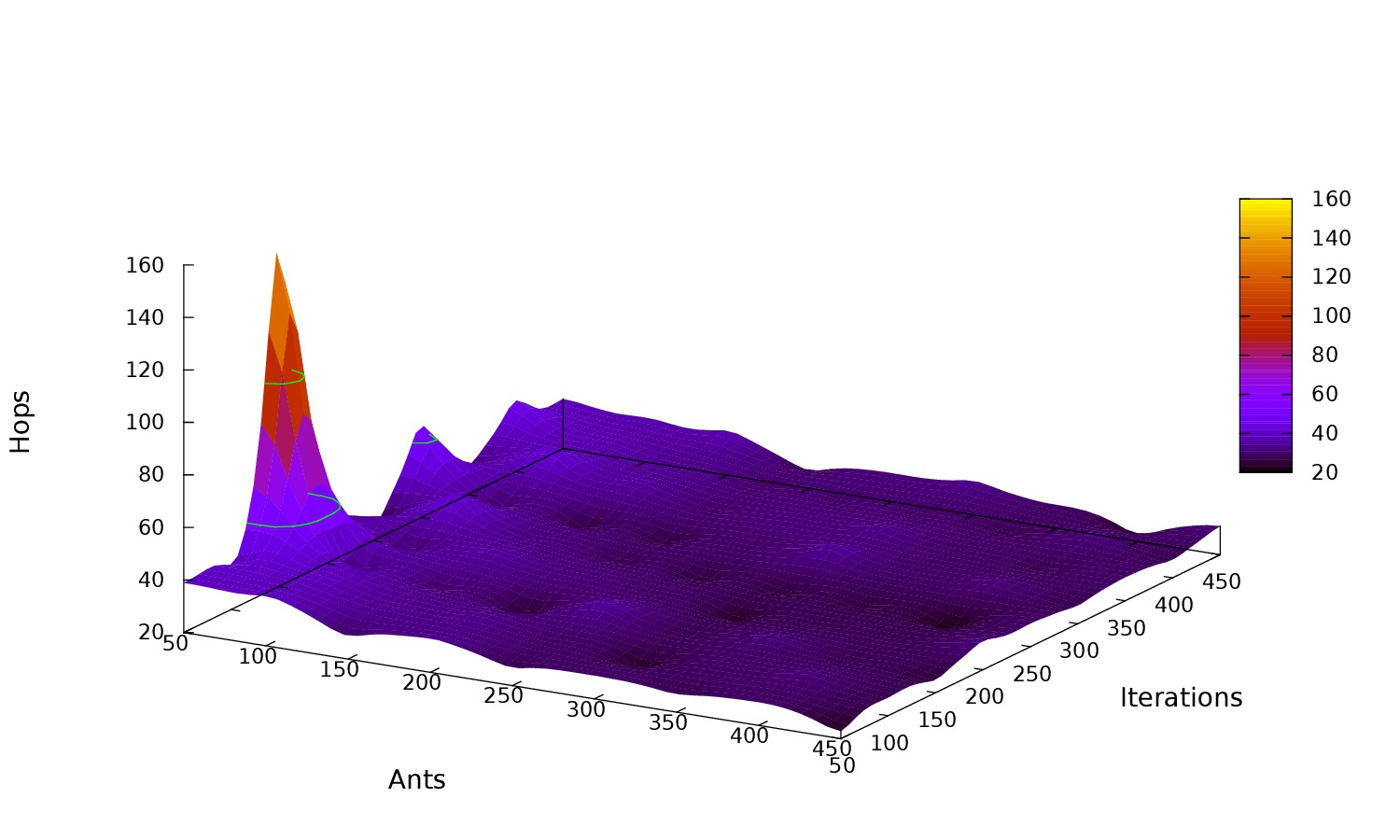
In order to analyse both the usability and accuracy of the developed algorithm, several surfaces have been modelled. The first surface consists of a grid of 25x25 regions. The size of this surface is equivalent to almost 9 soccer fields. The second surface consists of a grid of 50x50 regions, which approximately represents an area 4 times larger than the gardens of Versalles. The last modelled surface consists of a grid of 100x100 regions, having a total extension nearly double of Vatican City.

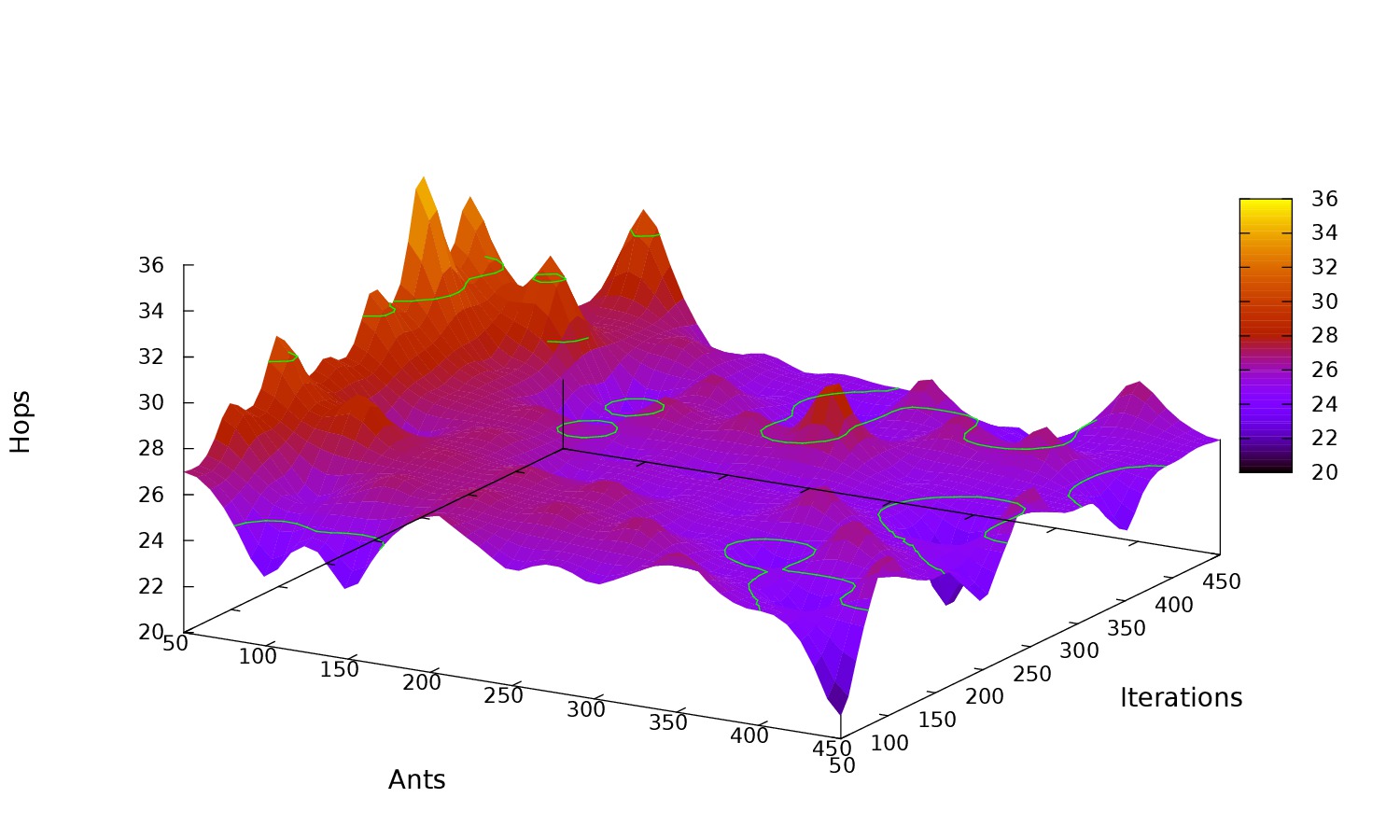
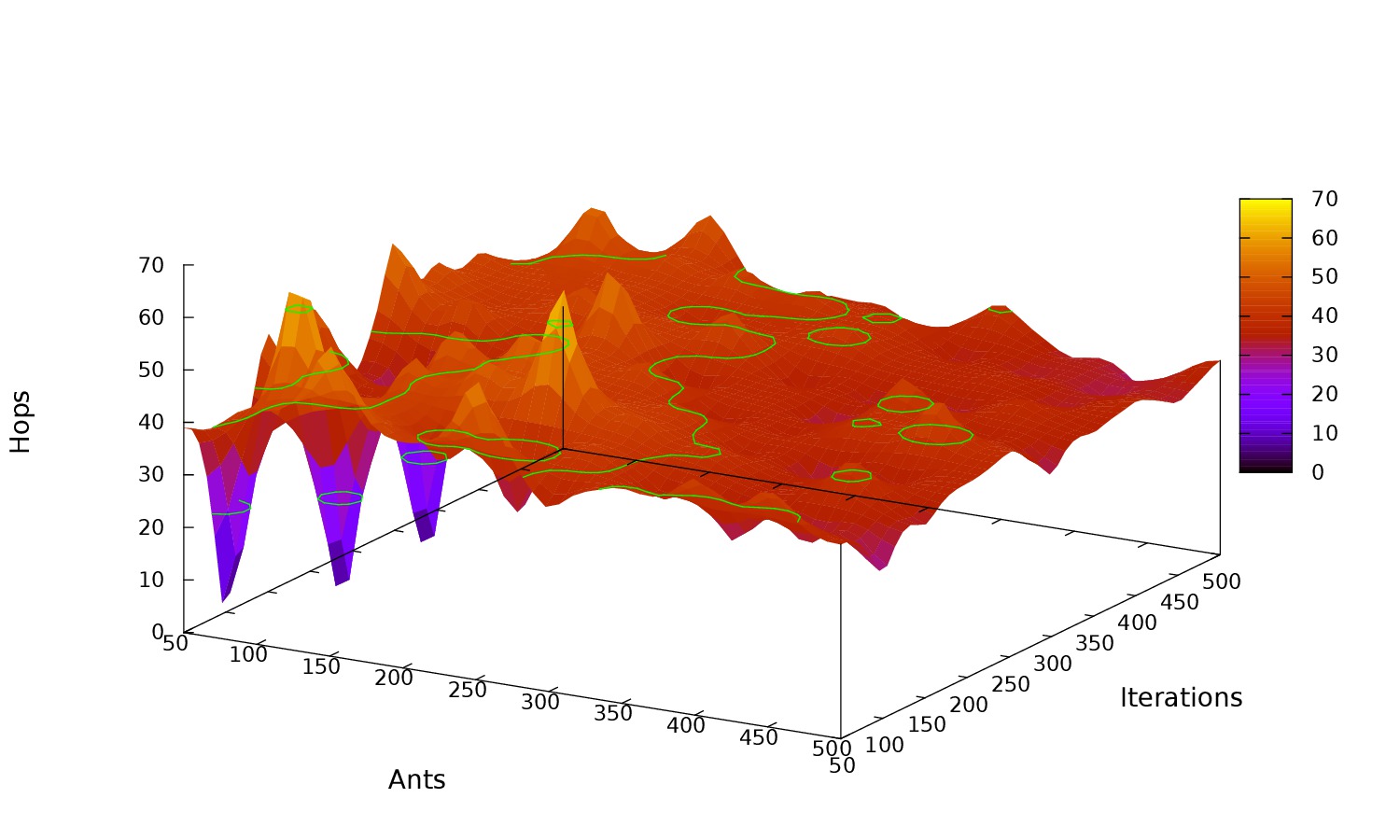
As a conclusion, increasing the number of ants executed in these modelled surfaces provides better solutions than using a low number of ants. This is mainly caused because increasing the number of executed ants also increases the probability of finding the best solution.When using a low number of ants, the solution can be improved by increasing the number of iterations. In some cases, using the maximum values for the number of ants and iterations may provide a slight improvement in the solution, which is more noticeable in large surfaces.

Available source code

The project has an open source license.